
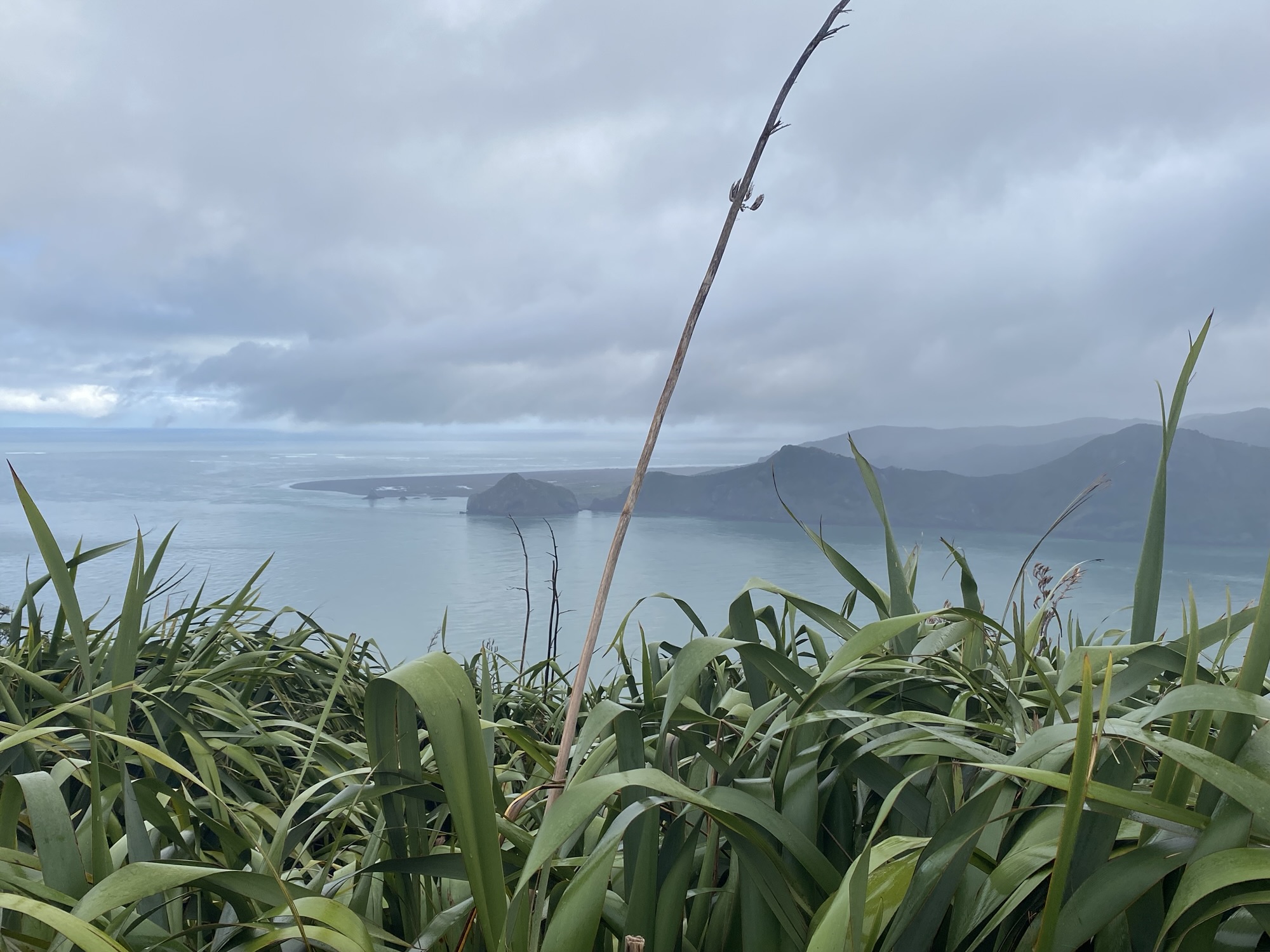
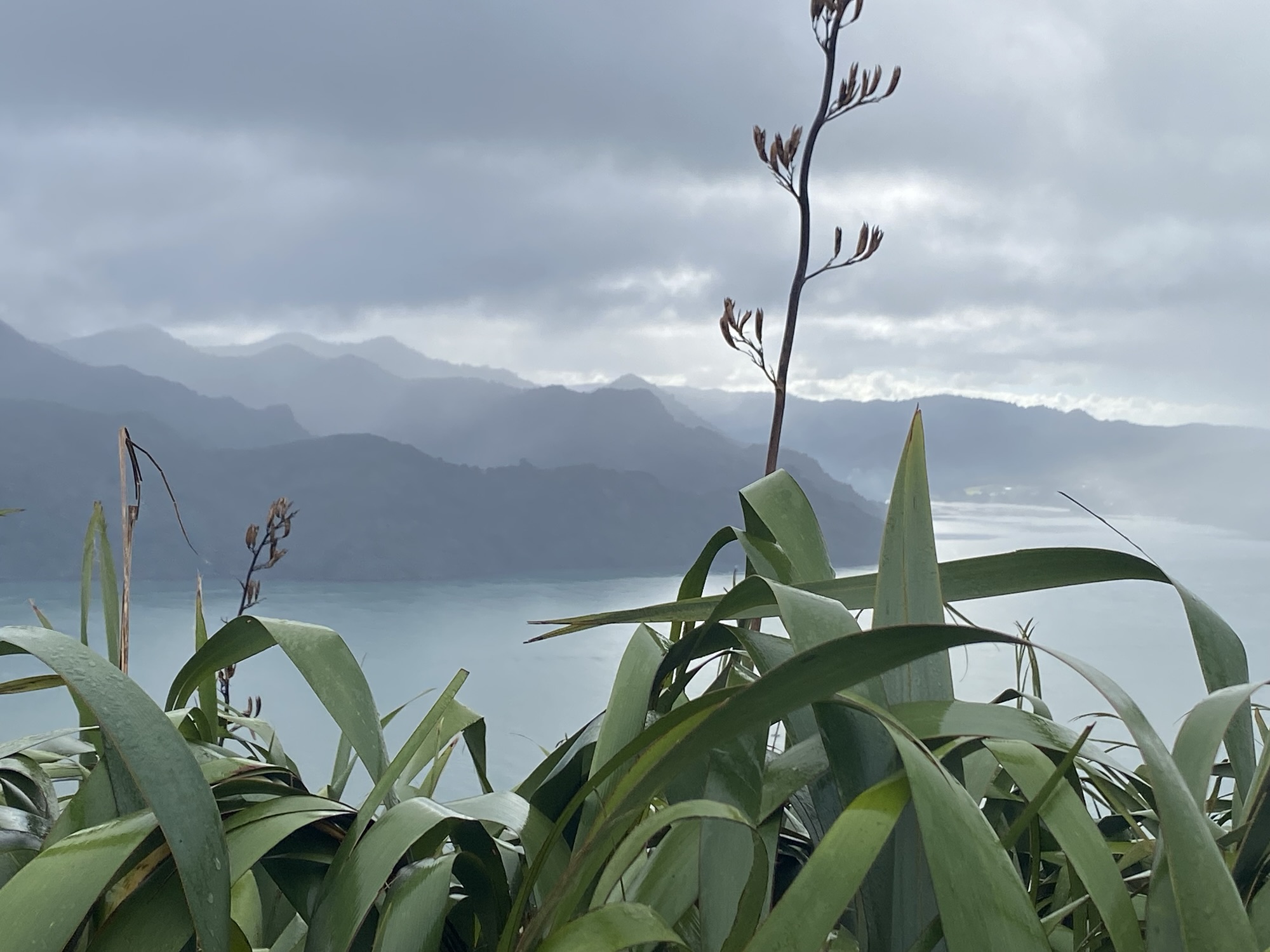
Sunday wakes to a beautiful Winters morning. Perfect for the planned Sunday drive to explore Awhitu peninsula, southwest of Auckland. Total drive time is estimated to be two hours. One hour to the most western point, Hamilton’s Gap, home to Auckland’s largest sand dunes. Then a visit to the much-photographed light house at Manukau Heads, before weaving along the coastline for home. This trip is inspired by the views from many a flight above the Manukau Harbour. On the northern shores the beautiful tree clad Waitakere’s, a real gem in Auckland’s crown. The southern shores, paddocks and coastline, the less attractive (at least from the skies) of the shores of the Manukau. Despite its appearances from above, I am keen to see for myself what the Awhitu peninsula is like.
The wife is meh about the whole idea, leaving her decision until the morning. No, she decides, better things appeal. The oldest teenager was never interested. I still check just in case a new dawn brings a fresh sense of adventure. No. The youngest surprisingly entertains the idea. What spikes his interest is mention of the Glenbrook steel mill. It’s a well-known factory in these parts with its saw tooth roofline and billowing smoke. His interest starts with a basic question, ‘how is steel made?’ My inability to answer perhaps suggest I’m not a suitable tour guide for the inquisitive teen and any hope of a co-pilot is lost.
Alas, a Sunday drive on my lonesome looks in order.
That is until mother messages at 8am.
“What are you up to?”
I explain my plan with the forgone conclusion the parents will jump at the chance to spend time together. They decide against the option of having to get out of bed and make reasonable (but not excessive) pace to make it to mine for the planned departure time. After a gentle prod from me, they decide on second thoughts, yes, they will join me. I now have two co-pilots, who prove to be more unique and arguably better than the Microsoft version.
Soon we are in the food bowl of Auckland, paddocks with rows of brassicas, onions, potatoes and glass houses. Farms with livestock and kiwifruit. Dad ponders where his cousin farmed. Not long we pass the turn off to the Glenbrook steam train, a treat for another day. The turn off to the steel mill comes and goes, something for the way back. The town of the peninsula, Waiuku, appears. It has a very familiar feel, the streets on the outskirts complete with weatherboard homes of the 1950s era. The heart of the town, a mix of once glorious old buildings showing the signs of age and perhaps lack of investment, interspersed with newer, less substantial builds. Of course, there is the vape shop and the historic pub with the claim to having the longest continuous liquor license in New Zealand. The itinerary has us driving right through, the township waits for later in the day and a late pub lunch.
By now the question has begun that is to weave its way in and out of our conversation for the day, where is Jock’s farm? A name I have not heard from many a year, the former president of Auckland Federated Farmers, dad his deputy back in the 1990s. Mum and dad stayed a night at a beach somewhere, to attend what they surmise must have been Jock’s 50th at his nearby farm.
As the adventure continues westward, the setting more rural, more remote. The hills larger, some rolling, some with sharp, steep hills suitable for sheep only. Some farms are clearly well looked after, others less so with the lighter green paddocks, scrub and thistles. Something known to the eye of a farmer’s daughter. For this road trip is like every other trip beyond the greater Warkworth area – there is talk of the climate, apparently this region can get very dry in summer, this summer past a good one for them, the topography and the sand hills. Clearly some farms the ability to keep up with fertiliser and spray, while others not. Reference is even made to similarities to the topography and farming outside of Whakatane, albeit they have better climate for farming further south. It was my first road trip with the stepsons a few years ago it dawned on me that not everyone grew up with road trips talking about the top-dressing plane flying above, commenting on the black angus or Belted Galloway’s. The late arrival of the dairy tanker, perhaps this farm on once a day. Being able to tell the difference between a Hereford and a Friesian, or the favourite the ‘jersey girls’.
We near Pollok, a small village where I make a disclosure regarding the itinerary. Our first stop is in fact a shop. Dad enquires what sort of shop. He knows deep down it’s not a tractor shop or old car museum. But asks anyway.
“It’s a bric a brac shop” I tease. After grumbling as to the point of such a shop, dad decides not to set foot in the Pollok Arts and Craft Co-Op. Instead, mum and I have a lovely look around, the art works, the funky jackets beautifully made from old woolen blankets. There is pottery, and humorous birthday cards, photos and tea towels, art works and breadboards. Convenient, I had been thinking recently our warped bread board, now prone to mold, needs replacing, the uneven rock of it while slicing and dicing suggesting it passed its use by date. In what feels like a brief time, we re-unite with dad who has circumnavigated all of Pollok.
A short drive later we weave our way down the country road to Hamilton’s Gap. The carpark on grass, home to a couple of permanent residents in their Gypsey vans. The long drop loo takes me back to the finest as a child, difficult to find these days. Holding your nose beneath the t-shirt as you go as fast as you can. Mum decides she can wait.
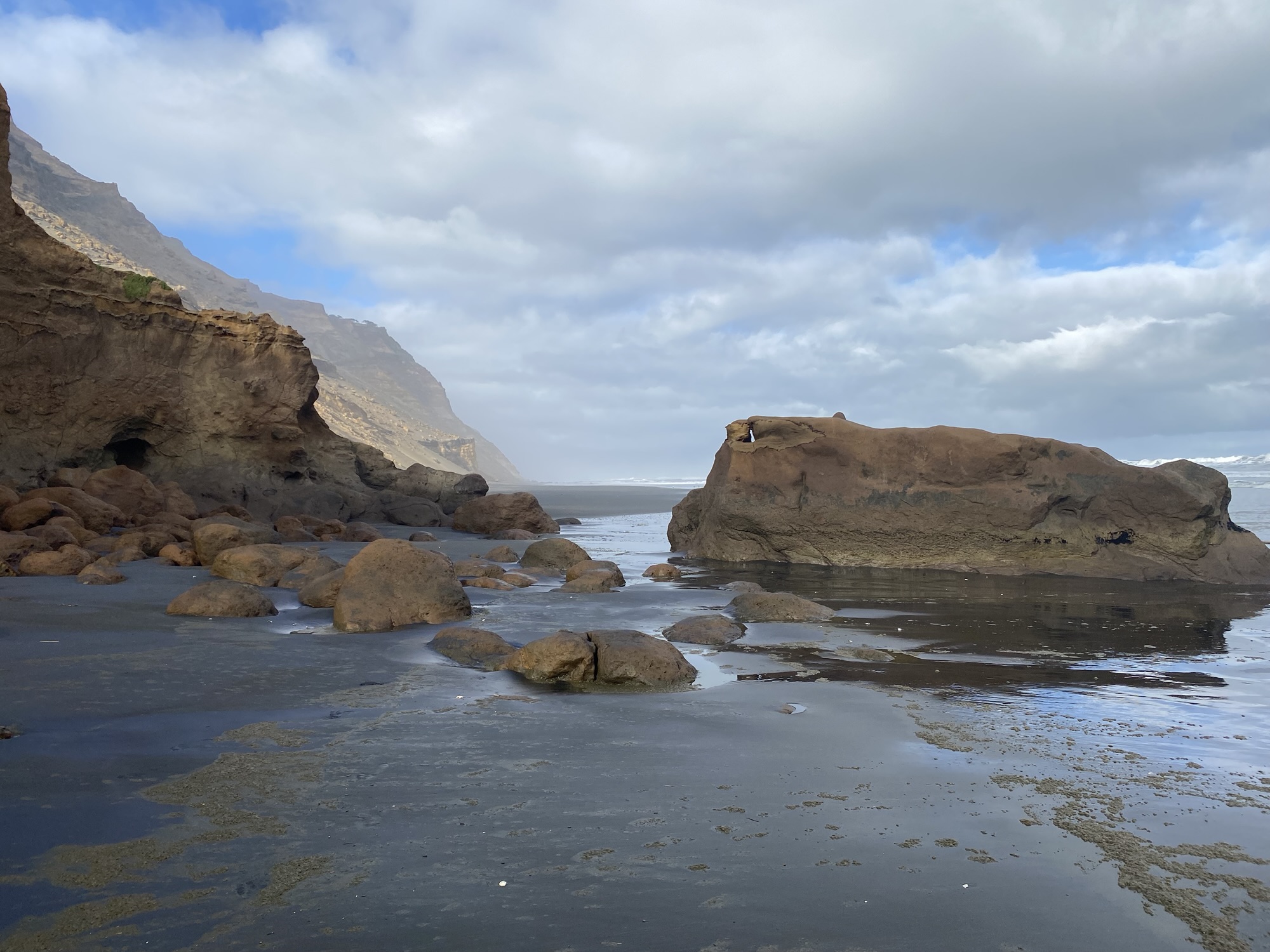
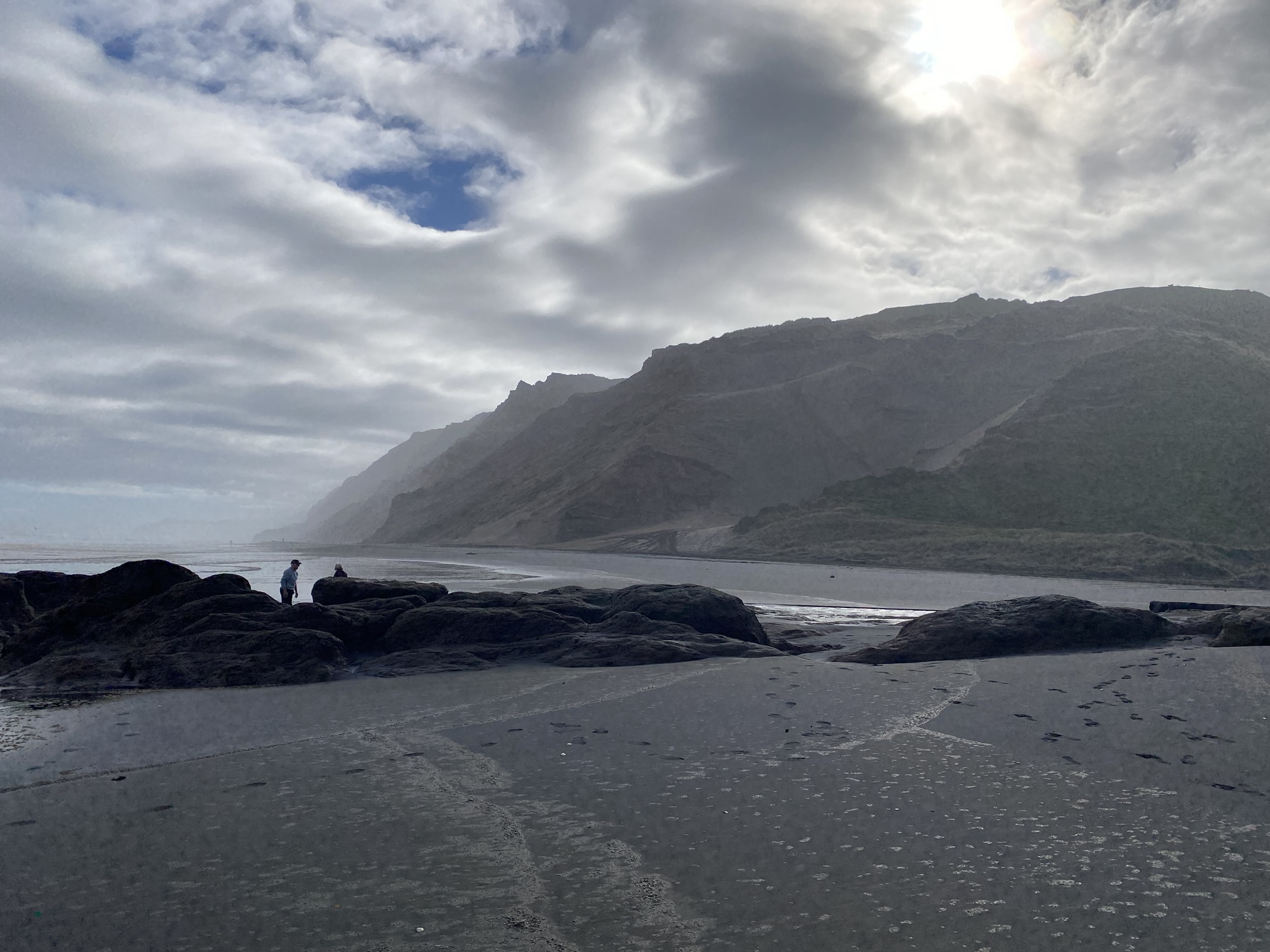
We venture down onto the beach. It is rugged, it feels a different world and yes, the sand dunes do tower high above. The mist weaves it’s way; the sea spray thickens the further the eye takes in the distance. There is something spectacular about the west coast. As born and bred east coasters that call the pristine white sands of Omaha home, we can appreciate something about this dramatic beauty and relentlessly crashing waves.
Dad explains the different layers or the rock and soil in the exposed orange cliffs. We walk across the volcanic plates visible in their narrow spines, wedged hard together. Dad then explains the black sand, the iron sand that washes from the central plateau down the Waikato river; this is what Glenbrook mill uses to make steel. He recites the story of the large boat off the Kawhia harbour not far south shipping iron sand to Japan. It’s now Gus may have enjoyed the trip, real-life examples and knowledge about volcanoes (recently studied in Social Science) and more insight into how steel is made than I can provide. As we meander back to the car, mum and dad recite the story of dining at Downing College in Cambridge UK with my sister, a teaching fellow there at the time. They were seated next to some of the older, former fellows or professors. One of them could not believe we did not do more with the amazing natural resource we have, that resource, iron sand. We pondered that a little as we headed north to the Manukau Heads.
As we near the carpark for the heads, the clouds that have threatened for some time now deliver the rain. It hasn’t deterred the Mazda MX-5 car club. The carpark full of the brightly coloured sports cars, the enthusiasts largely in their 20s by the looks. The car club perhaps a cool version of a Sunday drive as we roll up in our white Volvo hatchback, complete with hamper, picnic rug and Thermos.
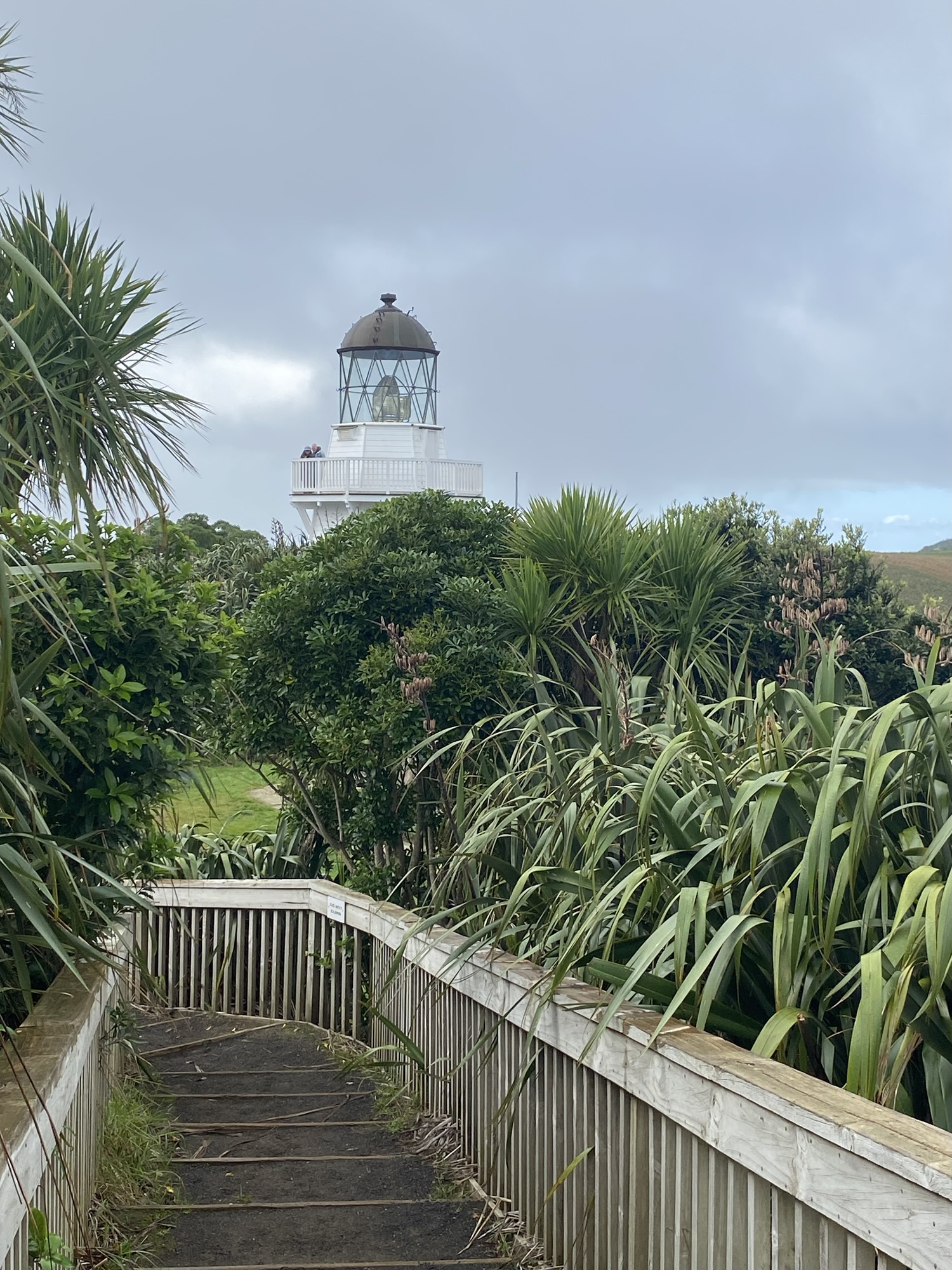
After a short pause in hope the shower is a temporary guest, we head up the steps to the light house. It is majestic in its tall white stature against the backdrop of the moody skies. The many information boards explain the history of the lighthouse built in 1863, partly in response to New Zealand’s worst maritime disaster, the HMS Orpheus. Delivering naval stores from Sydney, the captain opted for the shorter route up the Manukau Harbour to Onehunga, rather than rounding the top of the North Island to arrive at the more placid Waitemata. Using outdated maps, the HMS Orpheus became shipwrecked in poor weather, victim to the treacherous Manukau bar. 189 of the 259 naval officers on board lost their lives. Not long after the disaster, the lighthouse was built and was to become home to a small settlement. The story boards talk of the harsh living conditions for the signalmen and their families, the clifftops above the Manukau as gnarly as the waves below, in what was then a remote part of the country. The mouth to the Manukau reminds Mum and dad of Tane their dear (late) friend and some of his memories crossing the bar when he worked as a ships engineer for Holcim bringing cement from Westport to Onehunga. The weather today gives a glimpse of the changing mood of the Manukau Heads from the lighthouse viewing platform. One moment the low-lying cloud limits the view, within moments, the clouds disappear and suddenly the splendour of the Waitakere’s is in full view on the other side of the harbour. There is something about the dark, rolling hills covered in New Zealand natives and the rugged terrain, with inlets and harbours that remind me of the Marlborough Sounds, one of my favourite parts of the country.
As we descend, we take the short detour to another viewing platform, looking down over the signalman’s house, and now Airbnb. There, on the story boards is a picture of the Holcim ship that Tane would have likely worked on. And as happens in New Zealand, the stranger on the platform spending a day with his adult daughter currently works for Holcim. This sparks wonderful conversation with dad, something about only one company up North now using cement from New Zealand, the rest is imported.
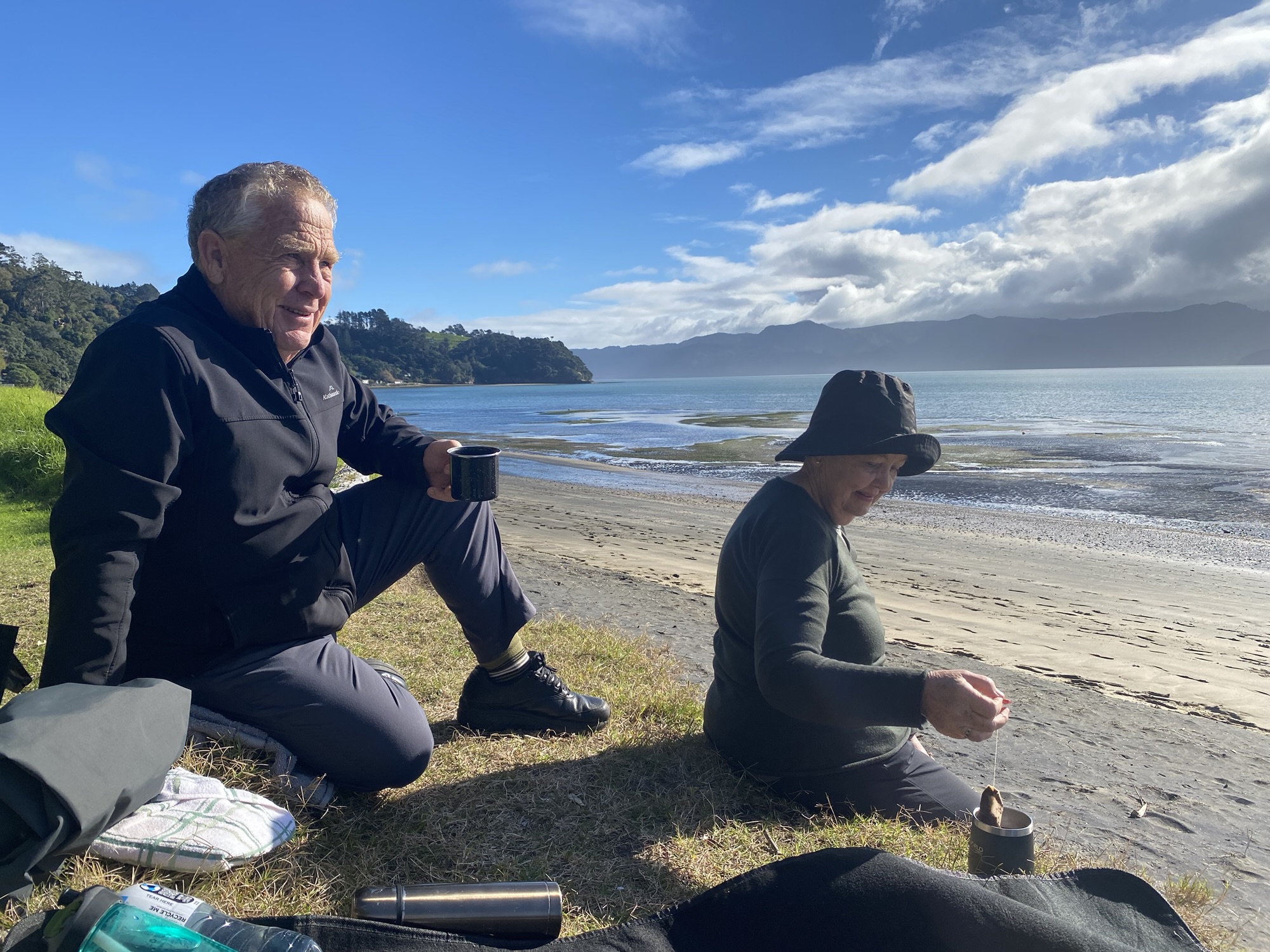
Time for the next stop, a beach somewhere. My mention of a cup of tea goes down with as much enthusiasm as offering a toddler a Popsicle. So, we head back to the car and start the slow drive towards home, with a few planned stops en-route. As we head eastward, through the farmland, there are now snippets of the city centre in the distance, landmarked by the Sky Tower. At a crossroad the signs suggest a few beach options to choose. We opt for Orua Bay. And what a choice it is. I get the small anti-pasta ready and we nibble away, mum and dad a cup of tea in hand. We sit quietly, by now the weather perfect for a winter picnic at the beach. The tide is out, not that it matters. The stunning views across the Manukau to the Waitekere’s has followed us. Small baches are dotted along the shoreline. As we wander along the beach, some homes appear to only be accessible by beach. Many of the places traditional baches clad in weatherboard and wooden joinery. All nicely kept, some brightly coloured. One of the larger, more modern homes is cleverly designed to look like caravans – quite striking and quirky. I ponder if it’s somewhere worth a quick weekend escape. If it wasn’t for the jets flying above, Orua and the neighbouring bays certainly tick away at a slower pace.
We carry on the drive, weaving in and out of the coastline. Still no confirmed sighting of the beach once stayed or Jock’s farm. By the time we reach the Kentish Hotel in Waiuku, the planned stop at the steel mill is aborted, as is the possibility of visiting a winery. As we departed this morning Rose offered to have warm scones, cream and jam waiting. As happens after several hours away, with the afternoon showing the earliest hint of nightfall, we decide home is the better option. But of course, not until we’ve had a drink and some hot chips. The Kentish is a large pub, the photos perhaps overselling it. However, I enjoy people watching. There are Canterbury shorts and Red Bands everywhere; and big bots (large bottles of beer). I can’t help but feel a sense of home, although in my younger days of enjoying the Kaipara Flats Sports Club there was no such thing as Speights low carb beer which now seems to be the preferred option over Lion Red.
“Waiuku is where the Jane Gifford came to die” dad pipes up between sips of Guiness. The Jane Gifford one of many shallow bottom scows, an important part of Auckland and New Zealand’s water ways as ‘transport workhorses’. Such boats used to cart, wait for it, cement down the Mahurangi to Auckland. The Jane Gifford built by the Meiklejohn’s in the paddock beside ‘our’ waterfall on the Omaha River. Warkworth locals saved the Jane Gifford and it now sits lovingly restored on the Mahurangi River. I can’t help but smile to myself, Rose both marvels and winces at all of this local knowledge. Today would have impressed her, how my co-pilots that grew up in the Warkworth area could weave so much of their knowledge, connections and history into a Sunday drive of the Awhitu. As I write, I’ve pondered whether to fact check a few things. But then, as a former boss wisely taught me, why let facts get in the way to a good story. And this is all about story telling of exploring places not far. Today, I got to explore, with the fountain of knowledge, the original Chat(y)GPT (grand parents of my Tribe) – nothing artificial about this intelligence, it may even be complete with hallucinations. So, while I may not race to recommend the Awhitu as a must do, I do highly recommend going on a Sunday drive with your Chat(y)GPT if you’re still lucky enough to have them. Very appreciative of the retirees getting out of bed for this one. Here’s to the next one.


Leave a Reply